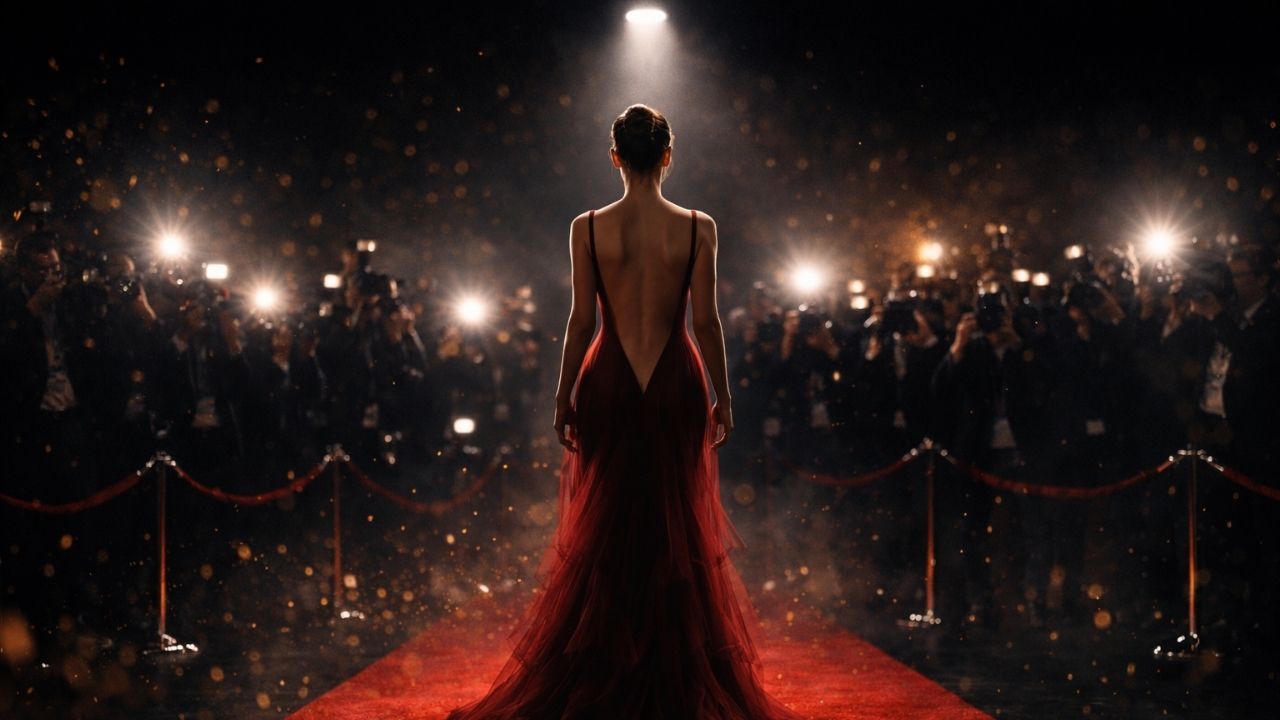

On March 15, 2026, the 98th Academy Awards ceremony took place at the Dolby Theatre. Everything proceeded as planned: the red carpet unfolded, men in tuxedos, a noticeable amount of exposed skin among female attendees, and camera flashes illuminating the moment. Nothing extraordinary for this type of event. And that is precisely the problem.
In the context of the ongoing fight against objectification and sexualization of the female body, what’s particularly striking is this: many women in Hollywood and the entertainment industry – including these very women, their colleagues, and friends within those circles – fought publicly against these very forces. Yet they appeared on the world’s largest media stage in hyper-sexualized presentation, wearing semi-transparent gowns with fabrics specifically designed to maximize the visual effect of exposed skin.
The Oscars platform is a statement-making stage, not a casual setting. Every element of presentation becomes a statement. When someone steps onto it, they’re making a declaration through what they wear, how they present themselves, and what they communicate. When that declaration contradicts years of public positioning, audiences – who once might have overlooked such contradictions – begin to notice. They begin to question personal brand development integrity. They begin to ask: Is this person actually what they claim to be?
This article helps you understand exactly why that question matters.
Personal Brand Development History – This Pattern Isn’t New
To understand why 2026 matters, you need to understand how we arrived here.
The visual language of strategic exposure isn’t new. Marilyn Monroe (1962), Cher (1970s), and various performers established the template: sheer fabrics, exposed skin, visual ambiguity about what’s actually being shown.
But the current obsession with the “naked dress” aesthetic began in 2014. Rihanna appeared at the CFDA Fashion Awards in a dress covered only with 230,000 Swarovski crystals – essentially exposing her entire body. The statement was explicit: if enough money is spent on embellishment, the exposure becomes “fashion.”
From 2014 through 2025, the escalation followed a clear pattern:
2014-2015: Rihanna and Beyoncé establish the aesthetic as “empowering”
2015-2020: This approach normalized at Met Galas, Grammy Awards, and major celebrity events
2021-2023: Reframed through feminist language as “reclaiming agency” and “freedom of expression” – with references to movements like #MeToo and Time’s Up, which created new awareness of objectification
2024-2025: Peak adoption – multiple designers (Dior, Gucci, Chanel, Versace) create collections featuring sheer fabrics and minimal coverage
2026: The trend continues, but audience response shifts fundamentally
Understanding the Visual Choices
The red carpet at the 2026 Academy Awards presented two distinct approaches to personal brand communication. Understanding this distinction is essential to understanding why audiences are withdrawing trust from personal brands deve on contradiction.
Some women arrived in gowns that communicated through sophisticated design. Rose Byrne wore a Dior strapless gown featuring intricate floral embroidery – covered from chest downward, with visual focus on the craftsmanship of the embroidered pattern. Lupita Nyong’o chose a structured Ralph Lauren gown, architecturally sophisticated with complete coverage, prioritizing presence and dignity. Halle Berry selected a custom Valentino piece emphasizing design and artistry. These women made choices that aligned their visual presentation with a broader narrative about being valued for dimensions beyond the physical body.
Other women made more nuanced visual choices – ones that at first glance appear provocative, yet are constructed through controlled aesthetic intent rather than passive objectification.
Other women made different calculations. Kylie Jenner appeared in a deep red gown with an extremely plunging neckline. Gwyneth Paltrow wore a look that revealed sheer side panels upon movement. Bryana Holly chose a traditionally sexualized silhouette. These choices still generated the same media focus on the body – on exposure, on what was visible.
The intent behind each choice differs. The effect is identical: exposure-focused presentation on the world’s largest media stage, from women who have publicly positioned themselves differently.
This is where personal brand development becomes complex – not in the choices themselves, but in what audiences observe. When a personal brand development message says one thing in interviews and shows another on the red carpet, audiences notice the gap. Whether the exposure is styled as art, minimalism, or personal expression doesn’t change what the audience sees: a contradiction between public positioning and visible choice.
The pattern is visible regardless of framing, and that’s the point.
This complexity makes the contradiction less obvious – but not less significant. In many cases, the tension shifts from visibility of the body to coherence of narrative.
The media coverage immediately reflected this divide. Women in elegant, covered gowns generated discourse about “sophistication,” “regal bearing,” “impeccable taste,” and “artistic vision.” Conversation focused on the design – craftsmanship, color, architectural silhouette. Photography emphasized their command of space.
Women in exposure-focused gowns generated headlines about their bodies. Discourse focused on what was visible – exposed skin, strategic transparency. The language echoed the language of objectification itself.
Each choice communicated something specific about focus. For women who had spent years publicly positioning themselves against objectification, the choice to wear exposure-maximizing garments created a contradiction that audiences finally began recognizing. Audiences don’t consciously analyze it like we are here. But they sense it. And that sensing erodes trust.
Personal Brand Contradictions – Having It Both Ways
Here’s where the mechanics become clear. Many celebrities in the entertainment industry have become skilled at a particular strategy: capturing benefits from two fundamentally contradictory positions simultaneously. They want to be perceived as advocates against objectification and want the media engagement generated by objectifying presentation. They want the credibility of feminist positioning and the commercial benefits of sexualized imagery. They want to sit on two chairs at once – gaining value from opposing narratives without the cost typically associated with either.
This is possible because most audiences lack unified language for naming it. They sense the contradiction. But they can’t articulate what they’re sensing. They feel something is inauthentic, but the framework for understanding why remains unclear.
Until a particular pattern becomes visible enough that denial becomes difficult.
Personal Brand Crisis – Arbitrage Strategy Explained
This is where personal brand strategy becomes systematically inauthentic, though the language used to defend it borrows from feminism.
Consider how this strategy operates in practice, using a composite example of how a contemporary female celebrity might navigate these contradictions:
- Building Activist Credibility. She positions herself as anti-objectification. She gives interviews about feminist activism. She opposes male gaze culture in public statements. She builds a platform claiming these values matter profoundly. She gains audience trust based on this positioning.
- Step Two – Supporting Credible Causes. She gives additional interviews emphasizing her commitment. She makes public statements against harassment. She supports organizations like #MeToo, Time’s Up, and Safe Set protocols – all legitimate causes that enhance her credibility as someone who genuinely opposes objectification.
- Activating the Opposite Strategy. At the moment of maximum visibility – a red carpet, a major platform, a high-engagement opportunity – she walks onto the stage in a garment specifically designed to maximize body visibility. She posts photos emphasizing exposure. She captures the media attention and social engagement that comes from strategic sexualization. The contrast between her previous positioning and this presentation is stark.
- Defending Through Empowerment Language. When the contradiction is pointed out, she claims “freedom of choice,” “body autonomy,” and “reclaiming power.” She uses feminist rhetoric to defend non-feminist choices. She frames critics as limiting women’s agency. The defense sounds reasonable in isolation, but it erases the context of her previous positioning.
- Collecting Benefits From Both Positions. She has achieved something significant: activist credibility from Steps One and Two, plus substantial media attention from Step Three. She has captured value from contradictory positions simultaneously.
This is marketing arbitrage in personal branding – a financial strategy concept applied to brand positioning. Just as financial arbitrage captures value from price differences between markets, personal brand arbitrage captures value from the credibility difference between opposing positions. In this case, the “price” is attention, influence, and cultural capital.
It works because most audiences lack the unified framework for naming what they’re observing. They sense the incoherence. But they can’t articulate it clearly. Until the moment becomes undeniable.
The 2026 Oscars was that moment.
Personal Brand Trust – Why Audiences Are Withdrawing
When audiences notice contradictions between stated values and visible choices, they adjust their trust accordingly.
Audiences aren’t saying: “Women shouldn’t wear revealing dresses.”
They’re demonstrating: “I notice the contradiction between your stated values and your visible choices. I’m adjusting my trust accordingly.”
This manifests measurably. Initial engagement may spike from controversy. Controversy drives engagement. But over time, as patterns repeat, skepticism develops. Engagement decreases. Brands become cautious about partnerships. The personal brand that benefited from arbitrage faces the cost: credibility erosion.
- For individual celebrities. A post featuring the “contradiction moment” may initially generate engagement spikes. But over time, as the pattern repeats, audiences develop skepticism. They become less likely to engage with content positioning the person as an advocate for something they’re simultaneously marketing against.
- For brands partnering with them. When a celebrity publicly advocates anti-objectification but wears objectifying collaborations on major platforms, that brand becomes implicit in the contradiction. Audiences notice. The partnership signals something about the brand’s own values.
- For platforms amplifying them. Social media algorithms reward engagement. Contradictions generate engagement. So they get amplified. But audiences gradually learn to distrust the platform’s editorial judgment about whose voices deserve amplification.
The shift at the 2026 Oscars was that audiences – collectively – finally articulated what they’d been sensing: “This contradiction is significant. It shapes how much I trust this person’s other messaging.”
Personal Brand and System – Who Actually Controls the Choice?
The answer is complex. Multiple systems converge to push toward exposure-focused choices.
- Luxury fashion houses make deliberate decisions about what designs to propose for major events. They know exposure-focused gowns generate more media coverage than elegance-focused designs.
- Professional stylists operate within incentive structures where success is measured by media buzz. Exposure generates buzz faster than elegance.
- Career economics matter explicitly. A red carpet appearance generating significant media attention increases a celebrity’s market value. The calculation is transparent: which choice maximizes short-term visibility?
- Algorithmic reward is real. Instagram engagement increases when posts feature potentially controversial images.
- Money flow is transparent. Luxury brands offer better financial terms to celebrities willing to wear their most attention-generating designs. Exposure equals better compensation.
So it’s inaccurate to say simply “the celebrity chose this.” Multiple incentive structures – economic, algorithmic, industry-norm-based – created substantial pressure toward this choice.
But – critically – alternatives exist.
Rose Byrne resisted the incentive structure. Lupita Nyong’o made a different choice. Other women chose elegance. Those choices had to come from somewhere. They required deliberate resistance to incentive systems.
Which means the system is powerful but not absolute. Choice exists. And choosing to resist is meaningful – because it meant declining more lucrative offers, declining more media attention, declining the path of least resistance.
Why This Pattern Persists?
If the contradiction is so visible, why does it continue?
Because for individual celebrities, the short-term economics are favorable. A sheer gown at the Oscars generates more immediate media attention than an elegant dress. That attention translates to social media engagement, visibility, and increased market value. The short-term gain is measurable and immediate.
The long-term erosion of credibility is harder to quantify. It shows up in declining trust metrics, lower engagement on certain content types, and difficulty securing partnerships requiring real credibility rather than just followers. But these signals are delayed. Short-term incentive overwhelms long-term concern.
The pattern will continue until one of three scenarios occurs:
- Scenario One. Audiences fully disconnect from contradictory personal brands. They stop following, reduce engagement, avoid purchasing products endorsed by them. Economic incentive reverses.
- Scenario Two. Luxury brands recognize that celebrity contradictions are becoming toxic to their own brands. They stop proposing exposure-focused designs or offering premium compensation for wearing them. Industry shifts.
- Scenario Three. Individual celebrities decide that long-term credibility matters more than short-term buzz. They resist incentive structures. The pattern breaks internally.
Currently, none are fully active. The pattern persists.
The Oscars Lesson
For anyone building genuine personal brand development – not just a following, but a brand development strategy built on specific values and positioning – the 2026 Oscars offers crucial lessons.
Values-action alignment isn’t optional. It’s foundational.
When someone says “I oppose objectification” but presents themselves in objectified ways, audiences sense it. They don’t consciously analyze it. But they perceive it. That perception shapes their trust and willingness to be influenced by this person’s other messaging.
The most powerful personal brand development isn’t built by people who manage contradictions elegantly. It’s built by people who eliminate contradictions in their brand development strategy.
Rose Byrne’s personal brand development choice at the 2026 Oscars wasn’t extraordinary. But it was coherent. In brand development, every element – the gown, styling, public narrative – must communicate the same message. That coherence is powerful. It’s also rare.
Most personal brand development strategies contain some degree of contradiction. The question in brand development isn’t whether the gap exists. The question is whether audiences notice it and care enough to withdraw trust.
In 2026, audiences began asking these questions. The risk calculus for building personal brand development strategies on contradiction shifted fundamentally.
Where to Start
Personal brand development consistency isn’t a tactical fix. It’s the foundation of sustainable influence. If your personal brand development carries the weight of contradiction – if what you publicly advocate differs from what you visibly choose – the market eventually notices, and audiences adjust accordingly.
This is where strategic brand development intervention becomes essential. We work with individuals and organizations to identify and resolve the gaps between stated values and visible actions in their personal brand development, rebuilding on a foundation of authentic alignment.
Our approach spans the full spectrum of personal brand development: from initial brand audit to comprehensive brand strategy, including rebranding initiatives, influencer marketing for audience-facing brands, and integrated marketing strategy that positions your values as competitive advantage.
The first step is understanding where your brand currently stands. Schedule a strategic consultation to explore how values-alignment strengthens your market position and builds the kind of trust that sustains influence over time.
Final Analysis
The 2026 Oscars didn’t reveal something fundamentally new. The contradiction has been building for years.
What changed is audience cognition. People stopped overlooking the gap.
For anyone building a personal brand, this shift is critical. Authenticity is now competitive advantage.
Personal brands that will thrive in coming years won’t be built by people who manage contradictions well. They’ll be built by people whose choices align with stated values – not perfectly, but genuinely enough that audiences stop waiting for the contradiction.
Your choices communicate your values louder than your words ever will.
What are you actually communicating?