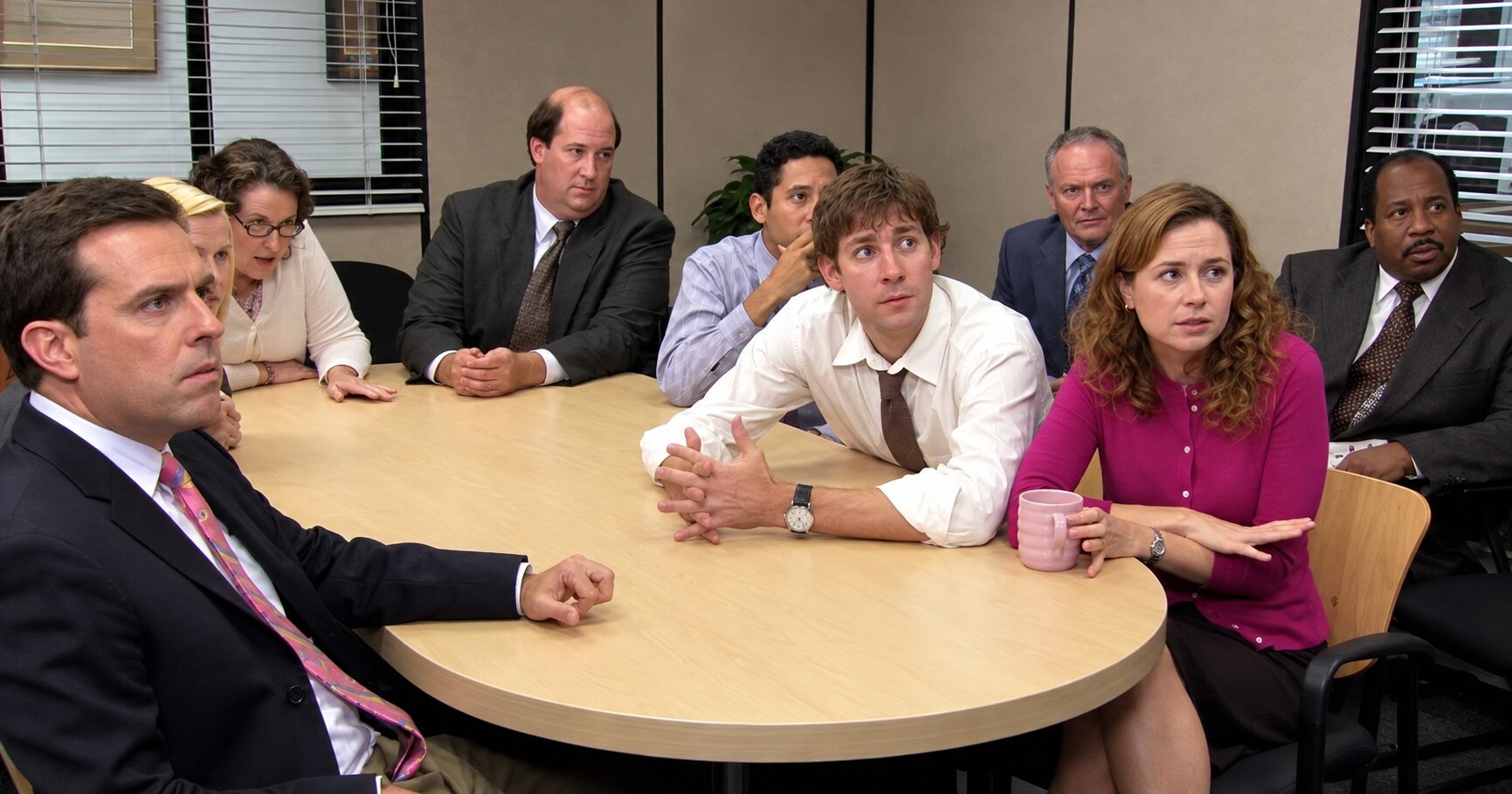

McKinsey study studied 1,048 major business decisions and found that the way people discussed a decision affected its result 6 times more than the quality of the analysis behind it. When an in-house marketing team and one or two outside consultants choose a campaign, the boardroom works like a focus group.
Unless the process prevents it, votes go to the most familiar option or to the concept the director praised first. Anyone who disagrees then has to argue against the person who decides their work or their next booking, so a bold concept can be dropped before any customer sees it. Of all in-house marketing team problems, this one leaves the fewest traces: nobody can show what the rejected idea would have earned.
In-house marketing team problems repeat those of focus groups
Collective approval is a sensible habit. A campaign touches sales, finance and the brand, so the people responsible for each want a say. A shared decision spreads the risk, and a team that agreed to a campaign works harder to make it succeed. Outside marketing consultants are invited into the boardroom for the opposite reason: to bring a view that is harder to form from inside the company. On paper this is sound governance, and it fits neatly into any marketing strategy process. Group review also does useful work: it catches legal risks, budget overruns and ideas that look bold only to the people who proposed them.
I call this group a focus group because it has the same structure. In classic focus group research, six to ten people sit in a room, look at concepts and give their reactions. The Monday marketing meeting does the same with five to ten people. Around the table sit the marketing manager and the marketing director, a digital or brand lead, the social media manager, and one or two PR (public relations) or marketing consultants who bill the company by the hour.
The in-house version differs from a consumer focus group in two ways. Participants in a consumer focus group are strangers who will never meet again. The people in the boardroom will sit together next Monday, report to the same director and remember who argued against whom, so they have more at stake, and the usual focus group problems weigh on them harder. At the same time, they know the product, the margins and the customers, which a recruited panel does not.
A consumer focus group and an in-house marketing meeting involve the same number of people – 6 to 10 – yet the boardroom setting introduces three pressures a consumer panel lacks: a shared boss, a shared budget, and next Monday’s meeting.
In-house marketing team problems with bold ideas come from the way the decision is made more than from the people who make it. A group that judges creative work out loud gives an advantage to the option that is easiest to defend. That is the option closest to what the company has already run, because its results are known. A bold concept needs time and context to be judged, and a meeting gives it neither. By a bold concept I mean one that departs from what the company and its competitors already run, in message or in form, rather than one that is simply loud.
The director’s opinion can weigh more heavily on the final decision than a strong argument. Once the marketing director says “I like B”, the marketing managers who report to the director have little reason to push for A, and a consultant whose next booking depends on this boardroom has even less. This is not always what the director intends: a director may invite disagreement and still hear little of it, because the marketing managers know who signs their appraisal and the consultants know who books their hours.
These focus group problems also grow when the campaign must please everyone present. Where one named person owns the decision and the others advise in writing before the meeting, a bold concept has a better chance of being judged on its merits.
Seinfeld & the Aeron chair survived focus group problems
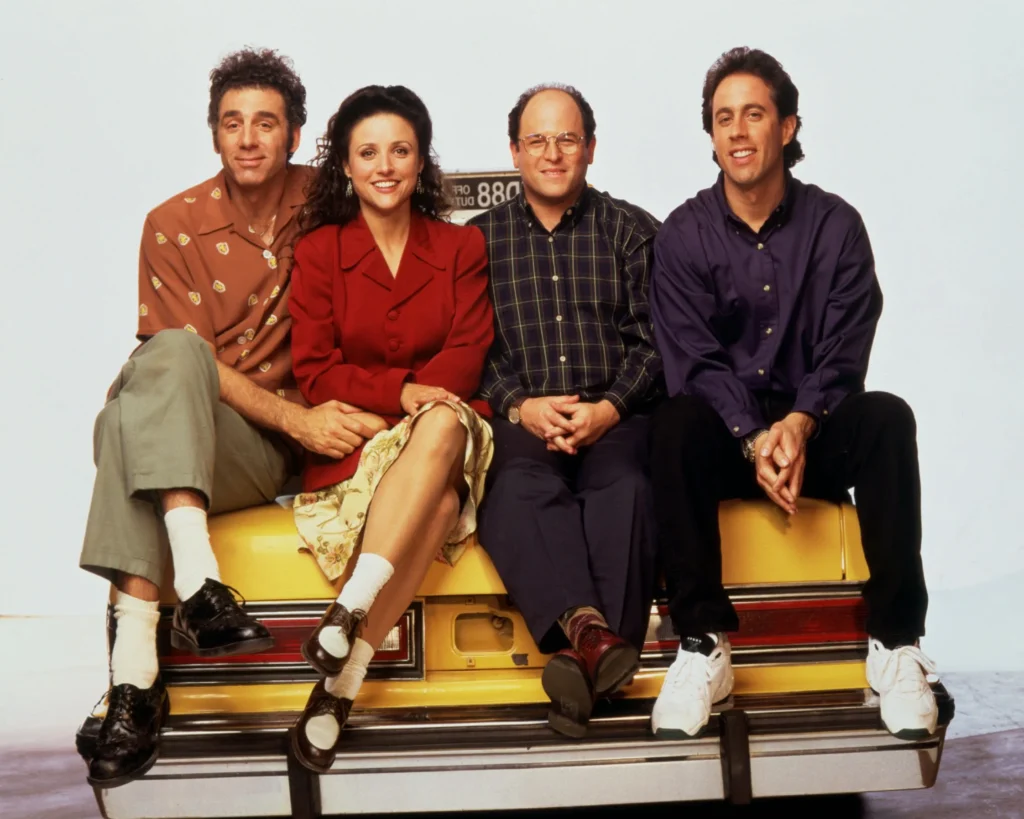
In 1989 NBC tested the pilot of a sitcom about a stand-up comedian and his friends in New York. The network’s research memo rated the result “weak”. One tester’s comment survived in the memo: “You can’t get too excited about two guys going to the laundromat.” Rick Ludwin, the NBC executive in charge of late-night and specials, paid for 4 more episodes by cancelling a Bob Hope special in his own budget.
Seinfeld later ranked first in the Nielsen ratings, the standard measure of US television audiences, in the 1994–95 and 1997–98 seasons. The show survived because one executive could spend his own budget without a second vote, which a meeting that decides by consensus does not allow.

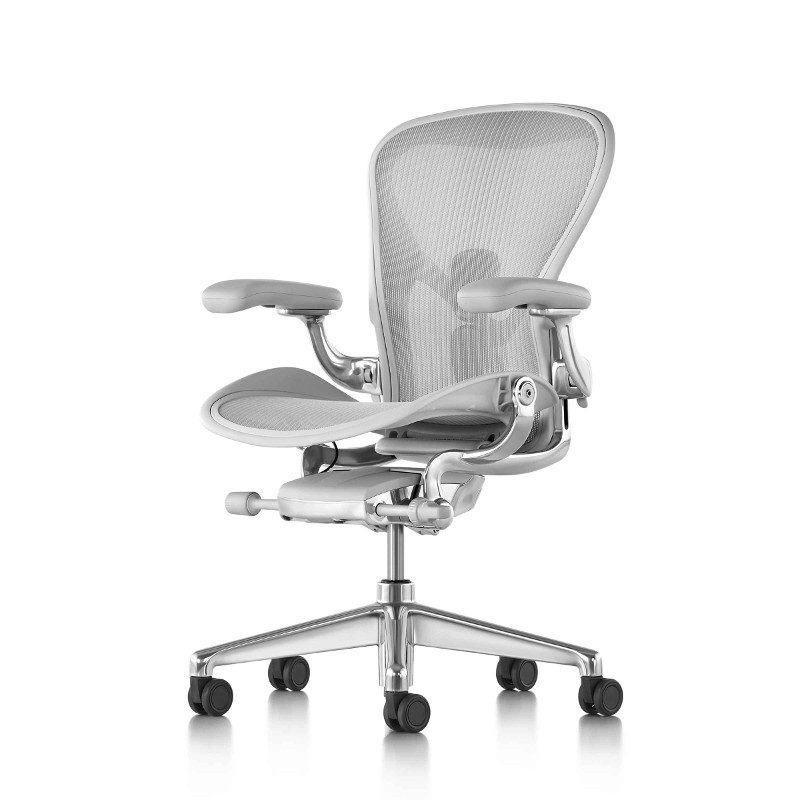
In 1994 Herman Miller prepared to launch an office chair with a mesh seat and back instead of foam and fabric. Its designer, Don Chadwick, later recalled the first reaction of the company’s own marketing people: “You can’t sell a chair without upholstery.” The Museum of Modern Art added the Aeron to its permanent collection the same year, before general release. In 2010 Bloomberg called it the best-selling individual office chair in the United States. By 2026 more than 9 million had been sold.


Put side by side, the two stories differ in one place and match in another. At NBC the doubts came from recruited viewers, strangers to the network, so this was a consumer focus group at work. At Herman Miller they came from the company’s own marketing staff, the kind of people who sit in your Monday marketing meeting. In both cases the idea survived because someone with authority and a budget went ahead despite the verdict: one executive at NBC, and at Herman Miller the company itself, backed by its designers.
We know these two stories because they ended well. Test audiences and marketing teams have also rejected ideas that would have flopped, and nobody tells us those stories. Seinfeld and the Aeron do not prove that a group’s doubts are always wrong; they show that a group’s “no” is not always the last word.
Marketing meeting discusses what people already know
In 1985 the psychologists Garold Stasser and William Titus asked small groups to choose between candidates for student body president. When every member held all the information, 83% of groups picked the strongest candidate. When the facts in that candidate’s favour were split between members, each holding a different piece, only 18% did. The groups discussed what everyone already knew. The pieces held by a single person stayed unspoken, even though the group as a whole had them.
The participants were students in a laboratory, not colleagues with a shared history, so the figures show the direction of the effect rather than its size in your meeting. The facts behind a bold concept are spread the same way: one person has read the comments, another has heard the customers.
A marketing meeting runs on the same bias. The shared information is what everyone has seen: last year’s campaign, the competitor’s billboard everyone passes on the way to work, the director’s taste. The unshared information sits with one person. The social media manager may have read 400 comments under the last post. The salesperson hears what customers say at the counter.
A bold idea needs this kind of knowledge more than a safe one, because a safe idea can point to last year’s results. If the social media manager does not mention those comments and the salesperson does not repeat what customers ask for, the boardroom judges the bold idea without the facts that support it.
When you look at a campaign decision, it is worth starting with two lists. Who in the boardroom would be blamed if the campaign flops? And who would be blamed if the better idea was never tried? In an approval process that keeps no record of rejected ideas, the first list has names on it and the second is empty. A safe campaign that underperforms is explained by the market. A bold campaign that underperforms is explained by the person who proposed it. Everyone at the table tacitly knows these two lists and votes with them in mind.
Which idea gets stopped, and how, depends on the values that run the boardroom. Spiral Dynamics, a model of value systems by Don Beck and Christopher Cowan, labels them with colours, so they can be discussed without praise or blame. In a Blue boardroom, where order and hierarchy lead, the idea dies on rank, because people hesitate to propose what the marketing director would dislike. In an Orange boardroom, driven by targets, it dies on proof: the concept is asked for numbers it cannot have yet. In a Green boardroom, built on consensus, one person’s discomfort is enough to stop it.
Each of these values also protects the company: Blue from chaos, Orange from waste, Green from decisions that ignore people. Before the next meeting, name which colour runs yours and change the rule that works against new ideas there: in a Blue boardroom, let the director speak last; in an Orange one, agree in advance what result of a small test will count as proof; in a Green one, name one person who decides after hearing everyone.
Red Bull launched after its own research said no
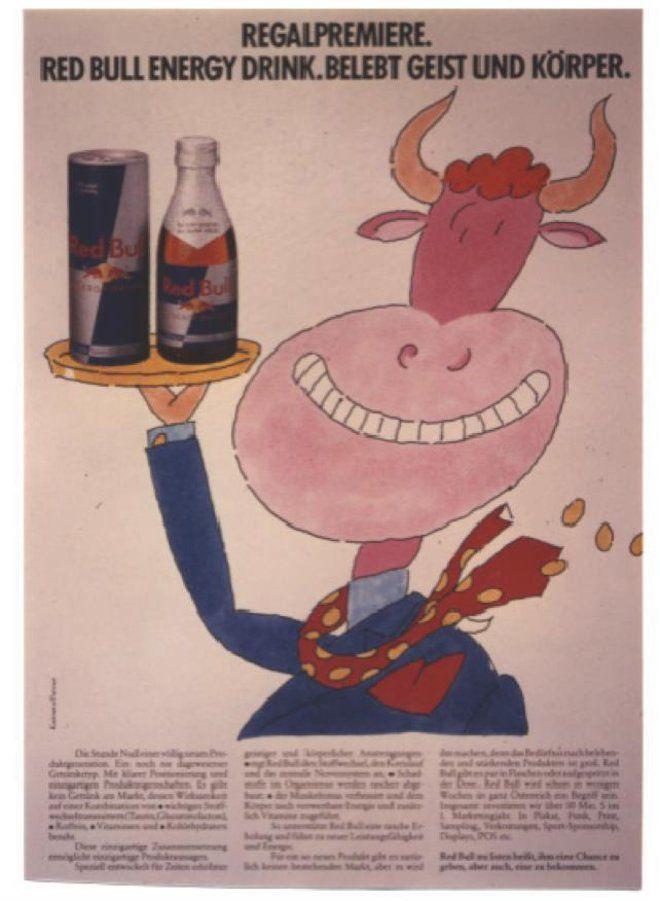
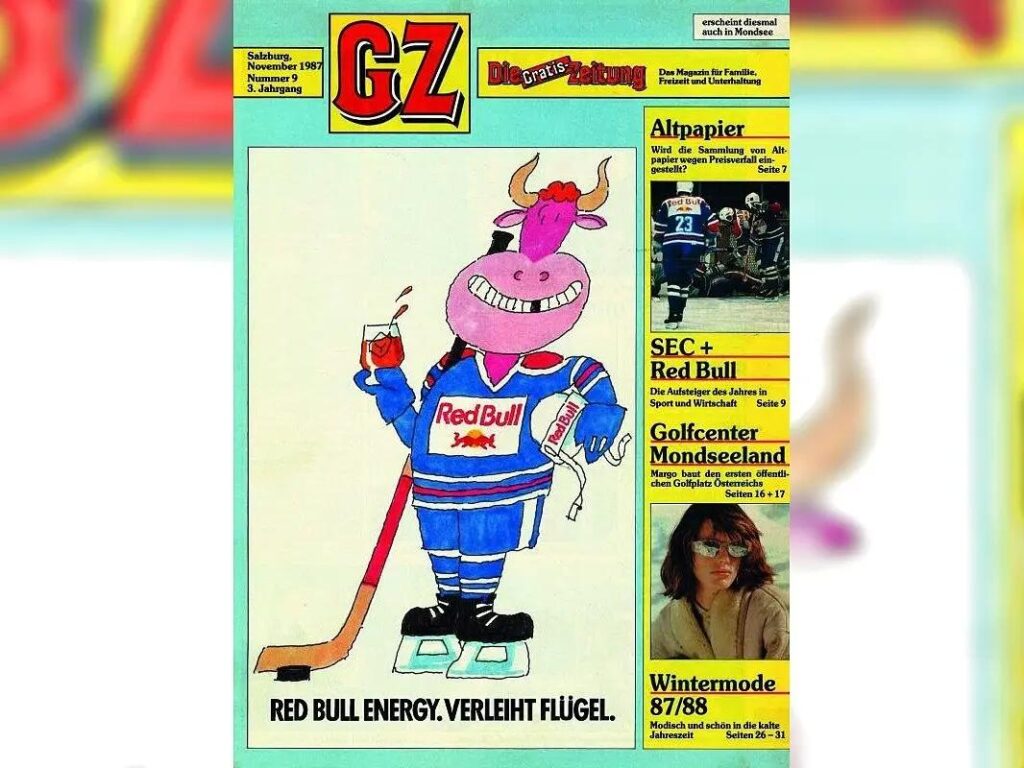
In the early 1980s Dietrich Mateschitz, an Austrian marketing manager, came across a Thai tonic drink, Krating Daeng, and spent about 3 years adapting it for European buyers. Before the launch he paid a market research firm to test the product. He later told Forbes that he had never seen a worse result: “People didn’t believe the taste, the logo, the brand name.”
He launched in Austria in 1987 anyway. The company sold 1 million cans in its first year, 2 million in the second and 4 million in the third. By 2004, according to the same Forbes report, people were drinking 1.9 billion cans of Red Bull a year. Revenue was around $2 billion (about €1.6 billion at the 2004 average rate).


The story has a survivor problem: we hear about the products that succeeded, while those that tested badly and then sold badly never reach Forbes. Red Bull shows something narrower than the legend. A negative test did not settle the question, and the person who owned the company could decide against the research. In a company where marketing decisions are made by a meeting rather than by an owner, the decision belongs to the group, and nobody is left to overrule it. That is why the procedure at the end of this article names one person who decides and signs.
Marketing consultant loses distance over weekly meetings
Companies invite outside PR and marketing advisers to the boardroom for their distance. An outsider sees other businesses, owes nothing to the internal hierarchy and can say what an employee cannot. In the first months this works as intended.
Regular work can shrink that distance. An adviser who bills by the hour and is invited to every weekly meeting depends on those invitations continuing. Each meeting becomes a small renewal decision. Disagreeing with the director on Monday costs nothing on paper, but it puts next week’s invitation at some risk.
After a year the adviser knows which ideas the director likes and which words irritate the finance team. With that knowledge the advice fits the company better, and it also moves closer to what the boardroom already thinks. Without a deliberate counterweight, the consultant can end up arguing from inside the team’s view rather than from outside it. This is a risk, not a rule: a regular consultant also builds knowledge an outsider lacks, and the audit research below shows that this knowledge has value.
Psychologists have described how this happens without anyone choosing it. Don Moore, Philip Tetlock, Lloyd Tanlu and Max Bazerman studied auditors, whose independence is required by law. In a 2006 paper in the Academy of Management Review they called the process “moral seduction”. Professionals move one small step at a time and stay unaware of how far their judgement has shifted. An auditor who lets a questionable figure pass in the first year finds it harder to object in the second, because objecting would admit that the first year was wrong. A marketing adviser who nodded through last spring’s safe campaign faces the same choice this spring.
Auditors and marketing advisers do different work, and the study did not measure marketing advisers, so the mechanism carries over but the size of the effect is unknown.
European law treats this risk as serious enough to regulate. Under Regulation (EU) No 537/2014, one audit firm may audit a public-interest entity, such as a listed company or a bank, for a maximum of 10 years. Member states may extend that only through a public tender or a joint audit. The partner who signs the audit must step away after 7 years and cannot return for 3. The regulation says these limits exist to address the “familiarity threat” to the auditor’s independence.
I looked for a study that measures how long a regular marketing or PR consultant keeps an independent view. The largest recent dataset I found on these relationships is the tenure report of April 2025 by the US Association of National Advertisers (ANA) and the American Association of Advertising Agencies (4As). It measures only how long relationships last: 7.3 years on average for full-service agencies and 3.7 years for media agencies, against 3.2 years in 2016. I could not find a measurement of what happens to the quality of advice over those years, in that report or in the marketing research I could reach.
So the nearest usable evidence comes from auditing, where the law already assumes that 7 years is enough for familiarity to set in. By that standard, the average US full-service agency relationship now runs past the 7-year limit for an audit partner, though it stays within the 10-year limit for an audit firm.
Two kinds of independent marketing consultant are best placed to keep the outside view. One kind has an inner independence from the majority. This person’s income or temperament does not depend on being liked by this particular boardroom, so they will say that concept B is stronger while the director is watching. The other kind joins for one decision and leaves. This consultant is brought in for a specific campaign, a rebranding project or a crisis, and is paid for the hours on that job without counting on next week’s invitation.
Marketing consultants in Malta compete for 917 companies
On a small market this process can run faster, and the reason is structural. The business register of Malta’s National Statistics Office (NSO) for 2025 counts 748 business units with 50 to 249 employees and 169 with 250 or more. Those 917 are the organisations most likely to have an in-house marketing team and pay outside marketing consultants every week. For marketing consultants in Malta, one regular client is a visible share of a small pool of buyers. News of a falling-out can reach the next prospective client through mutual acquaintances.
The network also works in the consultant’s favour: one known for honest advice is recommended faster. The same logic holds on any market with a few hundred large employers, from Luxembourg to a regional economy in Ireland. In a small pool, a falling-out and a reputation for honesty both travel faster.
No study says how long a consultant should stay
Two of my own principles pull in opposite directions here. I advise bringing in outsiders who do not depend on your money. I also hold that advice is only as good as the adviser’s knowledge of the business. Audit research shows the cost of ignoring the second principle. Victoria Johnson, Inder Khurana and Kenneth Reynolds (Contemporary Accounting Research, 2002) found that audit relationships of 2 to 3 years were linked to lower-quality financial reports. They found no such drop for relationships of 9 years or more. A new auditor misses problems because they do not yet know the client’s accounts.
The sums show the conflict. Take a PR consultant at €60 an hour who attends a two-hour weekly meeting and spends two more hours preparing for it. Over 48 working weeks that is 192 hours, or €11,520 a year. The alternative is a spot consultant for four major decisions a year, one working day each: 32 hours, or €1,920.
The spot marketing consultant is independent but arrives knowing nothing about the company. Bringing that person to the regular consultant’s level of knowledge takes about three working days per decision: 96 hours over the year, or €5,760. The total is €7,680, which is 67% of the regular arrangement, and three quarters of it pays for learning the business. The briefings also get shorter each time as the consultant learns the company, which is the familiarity coming back.
My choice is to keep the spot consultant and replace most of the paid briefing with a two-page written brief prepared by the in-house team. That moves the cost from consultant hours to internal time. This choice leaves one problem open. The brief is written by the same team whose views the outsider is meant to test, so the outsider sees the problem through the team’s framing. I know no method that removes this completely.
EU audit rules settle on 7 years for a signing partner. For a marketing adviser I have found no evidence for any number. The right mix of regular and spot advice depends on how fast your business changes and how many decisions a year deserve an outside view.
A €4,000 test gives bold marketing ideas a chance
The Institute of Practitioners in Advertising (IPA) keeps a databank of campaigns entered for its effectiveness awards. In 2019 the analyst Peter Field studied close to 600 of those cases from 1996 to 2018 in a report called “The Crisis in Creative Effectiveness”. Efficiency in his analysis means how much business effect a campaign produced for each unit of media spend.
Between 1996 and 2008, campaigns that also won creative awards were about 12 times as efficient as campaigns that won none. By 2006–2018 that advantage had fallen below 4 times. Field explains the fall by short-termism. A bold campaign builds a brand slowly, and its main effect on sales shows up over the long term. Yet more and more award-winning campaigns ran for six months or less: about 10% of those assessed in 2002 and 25% in 2018. In such a short run, a bold campaign is judged by quick sales before its effect on the brand has time to appear, so it looks no better than a safe one.
Apply the “who collected this data and why” test here too, because this evidence supports my own argument. The IPA is the trade body of UK advertising agencies, and its members sell creative work, so a finding that bold creative pays suits them.
The databank also holds only campaigns that agencies chose to enter for an effectiveness award. It describes successful campaigns and says little about the average one. Among campaigns that worked, the bold ones returned more per euro, and the data supports no wider claim. It cannot promise that a given bold concept will sell more than a safe one.
Picture a restaurant group in Malta with €9 million in yearly sales. Once food, wages, rent and other costs are paid, about €939,000 a year is left before depreciation and tax. The main campaign of the year puts €150,000 into media, which equals about two months of that profit. Testing the two strongest concepts first, with €2,000 of social media ads for each over two weeks, costs €4,000, or roughly a day and a half of profit. For that money the group sees which concept its audience notices before the other €146,000 is spent.
A two-week test measures attention, while Field’s data is about long-term effects on the brand, so treat the test as a check rather than a final verdict.
How a marketing team can judge bold concepts fairly
These steps work best in this order. How strictly to apply them depends on things this article cannot see: the size of the decision, your margin and the history between your team and its director.
- Write the job of the campaign in one sentence with a number before anyone sees a concept. For example: 200 extra bookings between October and November. The concepts are then judged against that sentence, not against anyone’s taste.
- Send the concepts two days before the meeting. Ask every participant to score them in writing, alone, and to add one fact the others may not know. The fact only one person knows is then on paper before the discussion starts.
- Let the marketing director speak last, after everyone else has given a view.
- Invite one outsider for this decision only, and pay for the hours spent on it. Ask that person to argue for the concept the boardroom likes least. An independent marketing consultant who works on creative concept development for other companies will see the options without your internal history.
- If two concepts survive, test both on your audience with a small budget, as in the calculation above. If the safe concept wins the test, run it: the aim is a fair hearing for every option, not a bold result at any cost.
- Name one person who decides and signs. The others advise. Record the decision, the reason and the job sentence from step 1.
- After the campaign, compare the result with the job sentence. A yearly marketing audit can review these records and show whether your meetings choose better over time.
The people in your boardroom are doing what the structure asks of them. The marketing manager proposes what worked last year, because last year’s results can be shown to the director. The director guards a budget the board will question. The consultant keeps a weekly booking worth about €11,500 a year. When all three play safe at the same meeting, the company gets a campaign nobody objected to, and possibly one its customers will not notice either.
Changing who speaks first, who decides and who is paid to disagree costs about €4,000 for a test, a few hours of an outside view and a new meeting rule. In return, the best marketing ideas in the boardroom have a better chance of a fair hearing before the vote.
If you would like an outside view on how your own team decides, you can book a consultation, look through the services I offer or write to me directly.
Sources
- Lovallo, D. and Sibony, O. (2010). “The case for behavioral strategy”. McKinsey Quarterly, March 2010.
- National Statistics Office Malta (2026). Labour Force Survey: Q2/2026, released 11 September 2026.
- National Statistics Office Malta (2026). Registered Business Units: 2025, released 4 May 2026.
- Stasser, G. and Titus, W. (1985). “Pooling of unshared information in group decision making: Biased information sampling during discussion”. Journal of Personality and Social Psychology, 48(6), 1467–1478.
- Moore, D. A., Tetlock, P. E., Tanlu, L. and Bazerman, M. H. (2006). “Conflicts of interest and the case of auditor independence: Moral seduction and strategic issue cycling”. Academy of Management Review, 31(1), 10–29.
- Johnson, V. E., Khurana, I. K. and Reynolds, J. K. (2002). “Audit-firm tenure and the quality of financial reports”. Contemporary Accounting Research, 19(4), 637–660.
- Regulation (EU) No 537/2014 of the European Parliament and of the Council of 16 April 2014 on specific requirements regarding statutory audit of public-interest entities, Article 17 and Recital 21.
- ANA and 4As (2025). Client-Agency AOR Relationship Tenure report, press release of 30 April 2025.
- Field, P. (2019). “The Crisis in Creative Effectiveness”. Institute of Practitioners in Advertising.
- Dolan, K. A. (2005). “The Soda With Buzz”. Forbes, 28 March 2005.
- TV Guide. “The Biz: The Research Memo That Almost Killed Seinfeld”.
- Aeron chair: designer quote, MoMA acquisition, Bloomberg (2010) and Wallpaper (2026) sales figures, as compiled at https://en.wikipedia.org/wiki/Aeron_chair
- Department for Industrial and Employment Relations, Malta. “Bonus and Weekly Allowances”.
- Beck, D. E. and Cowan, C. C. (1996). Spiral Dynamics: Mastering Values, Leadership, and Change. Blackwell.