Influencer pricing guide – From free products to fair compensation
Smart brands in 2026 are building hybrid compensation models: base rate + performance bonuses + product. This structure aligns incentives and respects the creator's time while acknowledging that influencers genuinely enjoy testing products. Everyone wins when the mathematics work for both sides.
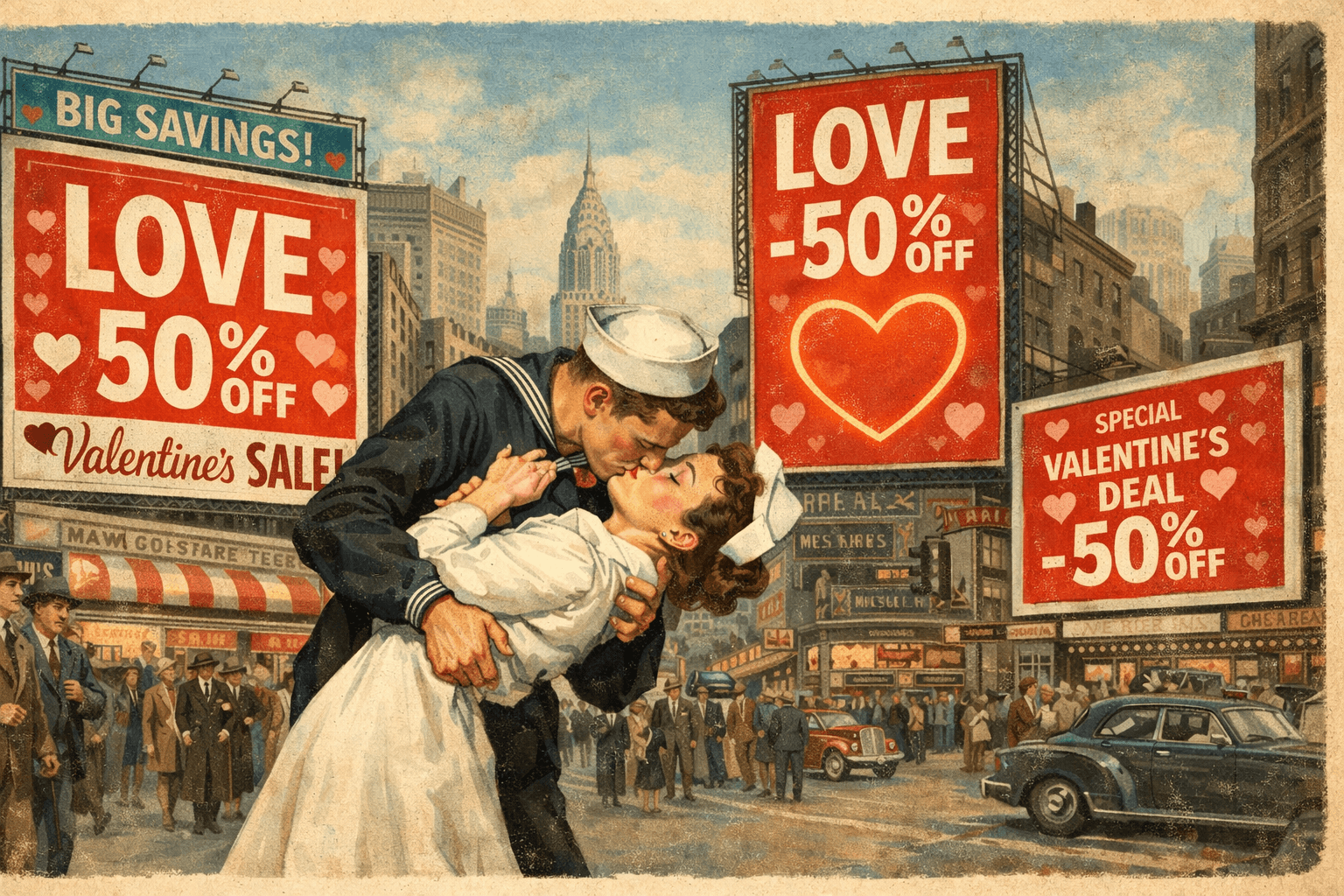
Love Marketing – What Erich Fromm Would Say About $29B One-Day Love Economy
Valentine's Day 2026 is projected to generate $29.1 billion in U.S. consumer spending. That figure comes from the National Retail Federation and Prosper Insights & Analytics (surveyed Jan 2–8, 2026; 7,791 respondents; margin of error ±1.1%). For anyone whose work touches love marketing - from CMOs to founders building personal brands - this number deserves more than a headline. It deserves a diagnosis.
Negative reviews psychology – Why 4.2 stars ratings build more trust than 5.0 perfection
The psychology is counterintuitive but well-documented: perfection signals manipulation. Imperfection signals authenticity. Your negative reviews aren't just unavoidable costs of doing business - handled correctly, they're trust-building assets.
Google Trends Data – Predicting What Markets Want Before It Becomes Mainstream
Last week in the UK market, something straightforward happened: cream tea search interest jumped 4,600% in 30 days. Not because of media coverage or influencer recommendation. Because people were actively searching for it-looking to buy it, gift it, experience it.
Micro influencer marketing – Why smaller audiences drive bigger results
Your customers trust the voices that genuinely help them find what they need, not the famous voices that just look good holding your product. You're not buying follower count. You're buying the probability that followers will notice, care, and convert.
Why Marketing in Malta Plays by Different Rules Than Mainland Europe
When I moved to Malta, I already carried 12 years of marketing experience and a quiet assumption that working on a small European island would be simpler than navigating the sprawling markets I had worked in before. A smaller audience, a tighter geography, fewer variables. It looked almost like a controlled experiment. I was wrong. And the ways in which I was wrong have taught me more about marketing fundamentals than any large-scale campaign ever did.
What $6M Meta and YouTube Social Media Addiction Case Means for Your Marketing Budget
What is the Best time to post on social media?
The obsession with posting times is a distraction from the truth that most brands aren't creating content worth engaging with, regardless of when it appears in feeds. But since you're here for the data, I'll give you both - the timing recommendations and why they matter less than you think.
Brand partnership checklist. What to verify before you sign
Brand partnerships, like any relationship, require chemistry. That chemistry isn't random. It emerges from aligned values, complementary audiences, operational compatibility, and clear mutual benefit. The brands that collaborate successfully aren't necessarily the most famous or the most similar. They're the ones that did the due diligence to ensure the partnership made sense at every level, not just the obvious ones.
Post-publishing edits – Why that “quick fix” after publishing kills your social media engagement
Every major social platform has optimised its distribution algorithms around initial engagement signals. When you modify content after publication, you're not just fixing text - you're triggering a reassessment process that often resets the momentum you'd already built. That is an algorithmic penalty most marketers trigger without realising it. Understanding how each platform handles post-publication edits separates marketers who consistently reach their audiences from those who unknowingly sabotage their own content.
Fake followers damage – Why 1200 bought followers cost you clients
A business owner recently shared what he considered a marketing win: his new social media manager grew his Facebook page from 200 to 1,400 followers for just €150. For a B2B professional services firm, that sounded impressive. Until I looked at the page.
Personal Brand Development Problem – When Celebrity Actions Contradict Stated Values, 2026 Oscars Analysis
For anyone a genuine personal brand development – not just a following, but a brand built on specific values and positioning – the 2026 Oscars offers crucial lessons. The most powerful personal brands aren’t built by people who manage contradictions elegantly. They’re built by people who eliminate contradictions.