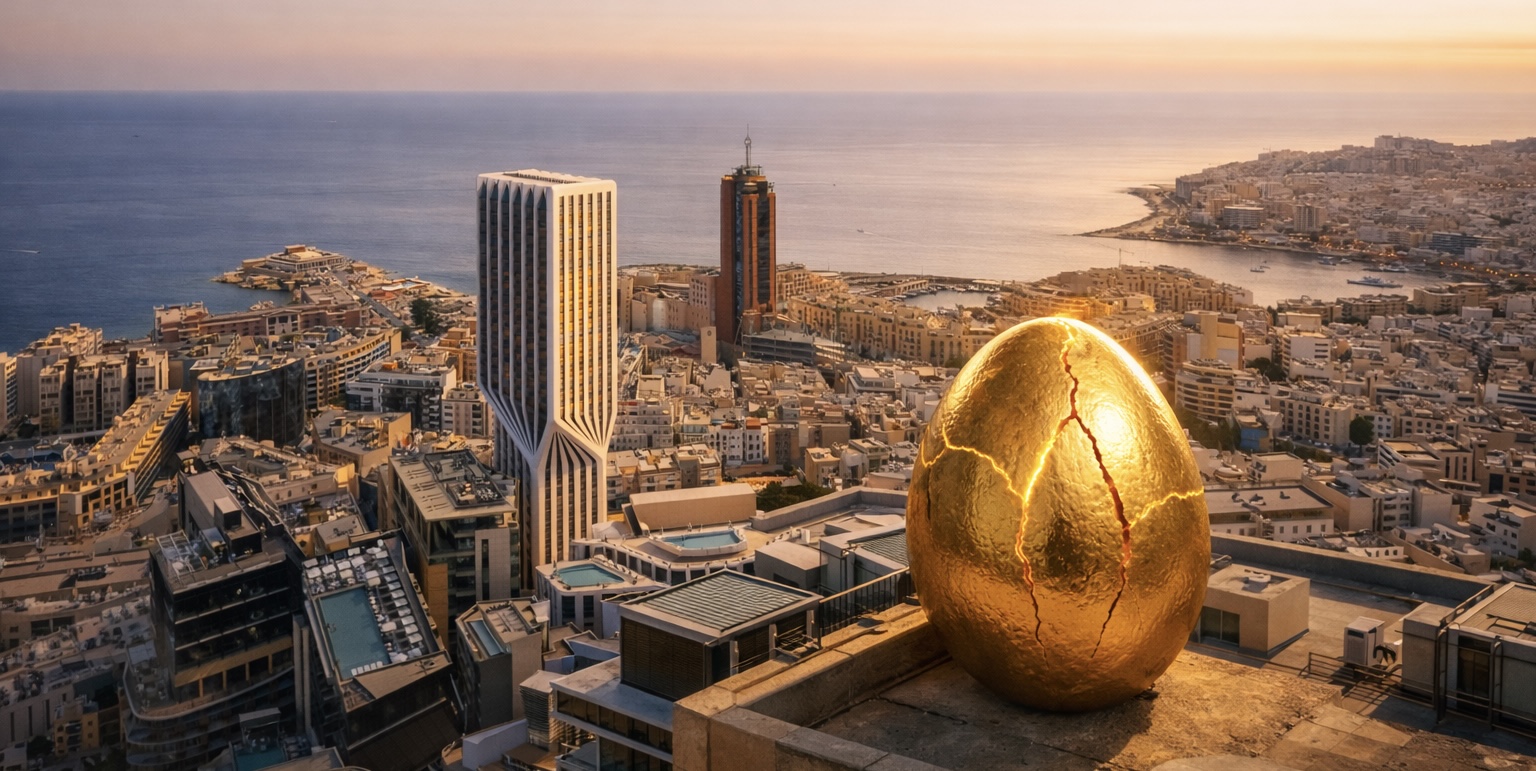

When I moved to Malta, I already carried 12 years of marketing experience and an assumption that working on a small European island would be simpler than navigating the sprawling markets I had worked in before. A smaller audience, a tighter geography, fewer variables. It looked almost like a controlled experiment.
I was wrong. And the ways in which I was wrong have taught me more about marketing fundamentals than any large-scale campaign ever did.
Malta is a country of roughly 549,000 people packed into 316 square kilometres, making it the most densely populated member state in the European Union. Over 73,000 businesses are registered here. There are more than 482,000 Facebook accounts. In 2025, the islands welcomed over four million tourists and generated nearly €3.9 billion in visitor spending. The economy grew at 4.0%, well above the EU average, driven by tourism, iGaming, financial services, and an inflow of foreign workers.
On paper, this looks like a vibrant, opportunity-rich market. And it is. But beneath the surface, marketing in Malta operates under a very particular set of rules.
This article is my attempt to map those rules – with the kind of nuance that only comes from living and working inside a market, not a theory.
Why Half a Million People Does Not Mean a Simple Audience
The first instinct when looking at Malta’s market size is to assume simplicity. Half a million people. How hard can it be?
Harder than markets ten times this size, but for entirely different reasons.
In a large market – Germany, France, the UK – you can segment, test, iterate, and afford to lose a slice of your audience while you refine your approach. The volume gives you margin for error. In Malta, that margin barely exists. Your target segment might consist of a few thousand people, and within that group, many of them know each other. A badly received campaign does not just underperform. It circulates. Business owners share screenshots in WhatsApp groups. A restaurant owner in Sliema knows a retailer in Valletta who knows a recruitment consultant in Birkirkara.
This interconnectedness changes how marketing in Malta works at a fundamental level. Word of mouth here is not a supplementary channel; it is the primary infrastructure through which reputation moves. Research by Baldacchino, Cassar and Caruana at the University of Malta found that among Maltese entrepreneurs, contacts, networking and word of mouth were rated significantly more important success factors than creativity or innovation. One respondent in their study said it directly: “Word of mouth is paramount on this island.”
Every touchpoint your business creates – from an Instagram story to a customer service phone call – feeds into a reputation ecosystem that is less forgiving and more interconnected than anything you would encounter in a mainland European market.
3 Portraits of Business Owners in Malta
After several years of working with and observing local SMEs, I have noticed that Malta’s business owners tend to cluster around three quite distinct operating modes.
- The operator. This is the owner who is physically present at their business location almost every day. They manage staff, handle suppliers, oversee quality, and perform tasks that in larger organisations would be delegated two or three levels down. Decision-making happens in real time, shaped by what they see on the ground. They are responsive, practical, and frequently stretched to their limits. Marketing, for them, is something they know they need but struggle to carve time for because the daily mechanics of the business consume their entire bandwidth.
- The builder who stepped back. This owner has constructed enough operational structure to afford a different rhythm. You might find them training for triathlons, attending industry events between Malta and the mainland, or investing time in new ventures. They are still engaged, but from a higher altitude. Their decisions tend to be more strategic in intent, though often more emotional in origin than they would openly acknowledge. They invest in rebranding because a competitor’s refresh made them feel exposed. They launch a campaign because something on TikTok stirred a competitive instinct.
- The international arrival. Malta attracts a significant number of entrepreneurs from the UK, Scandinavia, and other EU countries who relocate here and set up businesses. They bring experience, capital, and often strong technical skills. But they also bring assumptions. They arrive with marketing approaches calibrated for markets of millions and discover that the same targeting logic, the same media mix, the same messaging frameworks produce very different results on an island where everyone seems to be two connections apart.
All three types of business owners share something – they tend to make emotionally driven decisions and then construct rational justifications afterward. Daniel Kahneman documented this pattern extensively in Thinking, Fast and Slow, describing it as the interplay between intuitive and deliberative cognition. The practical consequence for anyone communicating marketing value here is that a proposal heavy on data tables and KPIs will not connect if it does not first speak to the felt frustration, the competitive anxiety, or the ambition sitting behind the brief.
Rhythm of Business on the Islands
Malta’s working culture has its own tempo, and misreading it costs time and money.
The business day often starts earlier than in most of continental Europe. In hospitality and retail – sectors that form a substantial part of the economy – 6:00 or 7:00 AM starts are standard. Saturday is frequently a working day, especially for anything customer-facing. The line between weekday and weekend is softer here than in Scandinavia or the Netherlands.
Decision-making follows its own cadence too. Formal meetings happen, but real decisions are often shaped in informal settings – over coffee, at a local festa, at a networking event, during a Sunday family lunch. Maltese business culture is deeply personal. Relationships are not just useful; they are often a prerequisite for trust. A cold email from an unfamiliar agency, however well-crafted, will almost always lose to a warm introduction from a mutual contact.
This produces a specific marketing consequence. In cultures where personal trust drives business relationships, the gap between brand perception and individual reputation narrows to almost nothing. For a small business in Malta, your brand is you. And for any marketing partner working with that business, understanding the owner’s personal narrative, values, and standing in their community is the starting point of any credible strategy. This is why services like personal brand development and brand strategy become essential rather than decorative in this environment.
Facebook Island Defies European Trends
If you have worked in digital marketing anywhere in Western or Northern Europe recently, you have probably been told that Facebook is fading. That Instagram, TikTok, and LinkedIn are where the energy has migrated.
On Malta, Facebook remains dominant.
NapoleonCat data shows approximately 482,700 Facebook users in Malta as of early 2025. For a country of roughly 549,000 people, that is an extraordinary penetration rate. A survey conducted by Switch, a Maltese digital agency, measured Facebook penetration at 93.1%, meaning that almost everyone on the island who is online uses it. The 25-34 age group is the most active segment, but usage remains substantial across demographics up to 55 and beyond.
Facebook’s deep entrenchment on Malta has a specific history. The platform was already popular before 2020, but the COVID-19 lockdowns intensified its role in everyday life. Malta imposed strict restrictions early – closing the airport, shutting non-essential retail, banning gatherings. During those months, existing Facebook groups like “Are You Being Served” (a consumer advice group with tens of thousands of members) expanded rapidly, and new neighbourhood support groups, buy-and-sell pages, and local community forums multiplied. For a population already accustomed to close social ties, Facebook became the digital extension of Malta’s face-to-face culture. Many of these groups remain highly active years later.
For marketers, this means Facebook advertising and community management on Malta are frontline tools, not legacy strategies. But the small audience size creates a targeting paradox. Meta’s ad platform was designed for populations of tens of millions. When you narrow geolocation to Malta and then layer on age, interest, and behavioural filters, your reachable audience can shrink to a few hundred people. Frequency caps become essential. Showing the same ad twelve times in a week to the same person is not brand building; on an island where people talk, it becomes an example of your company’s clumsiness.
Instagram holds a meaningful position too, with around 254,000 users, particularly among younger demographics and in sectors like hospitality, fashion, and lifestyle. LinkedIn has grown increasingly relevant for B2B services and professional personal branding. But the strategic weight in most local social media marketing and digital advertising plans still leans toward Facebook, and any agency that dismisses this based on mainland European trends is working from the wrong map.
SEO Challenge on a Micro-Market
Search engine optimisation on Malta presents a challenge with no straightforward solution.
The search volume for most commercially relevant keywords on the island is extremely low by international standards. A term that generates 50,000 monthly searches in the UK might produce 200 in Malta. The traditional SEO approach – build content around high-volume keywords, accumulate domain authority, outrank competitors – operates under very different economics here.
Does that mean SEO is irrelevant in Malta? No. But the strategy needs a fundamentally different architecture. Local SEO – particularly Google Business Profile optimisation – carries disproportionate weight. When someone in Mosta searches for “accountant near me” or “best restaurant in Valletta”, the businesses that appear in the local map pack often win the click regardless of their website’s domain authority. Reviews, accurate business information, and consistent local citations matter enormously.
For businesses that serve both local and international clients – common in Malta’s iGaming, fintech, and professional services sectors – a dual SEO strategy becomes necessary. One layer targets the local market with Maltese-specific terms and Google Business optimisation. Another layer targets international audiences with English-language content aimed at broader European or global search volumes.
This layered thinking is exactly where a proper marketing audit becomes indispensable. Without understanding where your traffic comes from, what keywords drive conversions (not just impressions), and how your competitors are positioned locally and internationally, you are allocating budget based on guesswork.
Reputation Economy
Malta has something that larger markets have largely lost: institutional memory at the community level. People remember. If your business had a quality issue three years ago, there is a reasonable chance that someone in your prospective customer’s circle remembers it. And will mention it.
A strong reputation compounds over time in a way that paid media alone cannot replicate. But reputation damage is equally persistent. And in the age of Google reviews and Facebook recommendations, the old community memory now has a digital archive that anyone can access in seconds.
Online reputation monitoring and review management are strategic necessities here, not cosmetic exercises. A business with 4.2 stars and 300 genuine reviews on Google is making a powerful statement in a market where consumers routinely check reviews before visiting a website. And because the community is small enough that fabricated reviews are more likely to be spotted and challenged, authenticity is non-negotiable.
Businesses on Malta need to build reputation management into their marketing operations as a permanent function. Encouraging genuine reviews, responding to feedback with professionalism, and monitoring what is said about your brand across social platforms and review sites should be as routine as reconciling your monthly accounts.
Tourism Factor and Its Marketing Ripple Effects
Tourism contributes approximately a quarter of Malta’s GDP. In 2025, over four million visitors arrived on the islands – nearly eight times the resident population. Tourist expenditure reached €3.9 billion, with average spending per visitor rising to €971.
For local businesses, this creates a dual-market reality that is too often addressed with a single marketing approach. A restaurant in St Julian’s might serve locals during winter and a largely international crowd during summer. These two audiences require different messaging, different channels, and different value propositions. A content marketing strategy that speaks only to residents misses the tourist segment entirely. One that speaks only to tourists alienates locals for eight months of the year.
This seasonal fluctuation affects hiring, inventory, cash flow, and brand positioning. A business that markets itself as a premium experience needs to maintain that positioning year-round, even when the crowds thin in November. Consistency of brand perception across seasons is one of the most underestimated challenges in marketing in Malta, and it is one that a well-built marketing strategy can address directly.
Recent data offers encouragement: off-peak tourism grew by 19% in 2025, suggesting that Malta’s positioning as a year-round destination is gaining real traction. Businesses that invest now in a strong digital presence and a recognisable brand are positioning themselves to capture this growing non-summer segment.
Why “What Works in London” Does Not Transfer to Sliema
One of the most common mistakes I see among businesses on Malta – particularly those run by international entrepreneurs or managed by people with experience in larger markets – is the assumption that marketing tactics transfer seamlessly across contexts.
They do not.
A Performance marketing campaign that delivers cost-effective leads in a city of 9 million operates under completely different dynamics than the same campaign on an island of half a million. Audience saturation happens faster. Creative fatigue sets in more quickly. Retargeting pools are shallow. The competitive landscape is simultaneously less crowded and more personal.
Malta’s consumers are not unsophisticated. Many are bilingual, digitally literate, well-travelled, and exposed to international brands. They just interact with marketing differently because the scale and social fabric of the market are different.
A Go-To-Market Strategy for Malta needs to be built from the ground up, informed by local data rather than imported playbooks. It should account for small audience sizes in paid media, the outsized role of word of mouth, seasonal shifts in consumer behaviour, platform preferences that diverge from European norms, and a business culture where personal trust regularly outweighs brand polish.
Pricing Perception on a Small Island
There is a tension in Malta’s market around value and pricing that anyone offering services here needs to understand.
The Malta Chamber of SMEs, in collaboration with MISCO, published its Business Performance Survey 2025 (SME Barometer) based on research conducted in January 2026. The findings revealed that while 43% of businesses reported turnover increases during 2025, rising costs and labour shortages remain the dominant pain points. Owners are feeling pressure from multiple directions: higher rents, increased wage expectations, bureaucratic complexity, and the persistent difficulty of finding and retaining reliable staff.
In this climate, marketing expenditure is often the first line item scrutinised. Because the return on investment can feel abstract when more immediate costs are pressing. It is about whether this specific investment, at this specific moment, will deliver a result the owner can see and measure within a timeframe that makes sense for their cash flow.
A marketing partner on Malta must be capable of connecting strategy to measurable outcomes. Not vague language about brand awareness or impressions, but clear frameworks linking activity to revenue. An email marketing campaign that demonstrably generates repeat purchases. A digital advertising initiative with transparent return on ad spend tracking. A content marketing programme that visibly drives organic enquiries over a defined period.
Thinking in Systems, Not in Campaigns
One of the things that separates a mature marketing approach from a reactive one is the ability to see the entire system rather than isolated tactics.
In developmental psychology, a framework called Spiral Dynamics – originally developed by Clare W. Graves and later elaborated by Don Beck and Christopher Cowan – describes how individuals and organisations evolve through stages of increasing complexity in their thinking and values. The model suggests that organisations at different stages of maturity respond to fundamentally different kinds of strategic communication. Some are driven primarily by competition and individual achievement, responding to messages about market dominance and outperforming rivals. Others have evolved toward more integrated, purpose-driven approaches and respond better to messaging that balances profitability with social responsibility and long-term vision.
I use this framework as a diagnostic lens. When I work with a business, understanding where they sit in their own developmental arc helps me design marketing that resonates with who they are and who they are becoming, rather than simply mirroring what their competitors do.
A family-run restaurant that has operated for twenty years in the same Maltese town has different strategic needs, different values, and different definitions of success than a venture-backed fintech startup. The marketing approach for each must reflect that difference in tone, in channel selection, in messaging, in measurement, and in pace.
This is why I have little faith in standardised marketing packages. What I trust is deep diagnostic work: understanding the business, the owner, the market position, the competitive landscape, and the cultural context before designing anything.
If You Recognise These Patterns
If you have read this far, you probably see some of your own experience in what I have described. Maybe you are a business owner who has tried marketing approaches that felt disconnected from the reality of operating here. Maybe you are a manager tasked with growing a brand on an island where familiar rules seem to bend. Maybe you are looking for someone who understands the specific dynamics of this market from years of working within it, not from a playbook written for a different continent.
My agency works across the full spectrum of marketing challenges: from marketing audits that map where your current efforts are working and where they are leaking value, through brand strategy and go-to-market strategy built for the dynamics of compact markets, to execution across content marketing, social media marketing, digital advertising, SEO, email marketing, influencer marketing, affiliate marketing, cross-brand collaborations, and creative concept development. For businesses navigating sensitive transitions, I also offer crisis PR and rebranding grounded in strategic thinking rather than improvisation.
Every engagement starts with listening.
Book a consultation to discuss your specific situation.
Explore our full range of marketing services.